
If your business wants to reach customers where they already spend their time, social media is the place to do it. It’s your direct line to customers, insights, and new opportunities for growth.
Read on for everything you need to know to build a winning social media marketing strategy for your business.
Key takeaways
- Social media is a core business channel. It helps brands reach new audiences, build relationships with customers, and generate leads.
- Consistency beats perfection. Posting regularly (and engaging in the comments) builds momentum over time.
- Social media is more than marketing. It supports customer service, reputation management, and real-time market research.
- Analytics turn activity into insight. Tracking engagement, traffic, and conversions helps prove ROI and improve your strategy.
- Tools make social easier to manage. Platforms like Hootsuite help teams plan content, track results, and stay organized across channels.
Social media can help brands increase visibility, connect with customers, and drive real business results. Used strategically, it can power marketing, customer service, market research, and lead generation all at once.
Here’s a quick rundown of how to use social media for business.
Increase brand awareness
Social media is one of the easiest ways to get your brand in front of new people.
Post consistently, and your content can spread through shares, hashtags, and algorithm recommendations. Suddenly, people who’ve never heard of you before are seeing your brand.
Parody magazine Hot Teen did exactly that. The brand built a following on Instagram before launching its first issue, because the first step of any business plan is simple: make sure people know you exist.

Source: @hotteenmagazine
Engage directly with your customers
Social media gives brands a direct line to their customers.
On platforms like Facebook, Instagram, and X, teams can respond directly to questions, join conversations, and address concerns in real time. It feels faster and more personal than email or a 1-800 hotline.

Source: Canva
Use that direct connection to build relationships with customers. (Brush up on social media customer service tips here!)
Promote your content
Social media is a powerful distribution channel. Each post can reach existing followers and bring new audiences into the mix.
You’ve put lots of hard work into crafting informative or entertaining content. Use social media to help that content travel farther than it would on its own.
Food brand Delish does this well by posting mouth-watering, share-worthy recipe Reels. Want the full recipe? Viewers need to head to the Delish website or app. It’s a simple way to drive traffic straight from social.

Source: Delish
To measure the impact of your promotions, leverage your platform analytics to track engagement and refine your strategy.
Generate new sales leads
Social platforms give marketing and sales teams direct access to large, highly targeted audiences.
Beyond relationship-building and social selling, most platforms offer pretty sophisticated advertising and targeting tools.
You can reach specific audiences based on demographics, interests, and behaviors, making it easier to attract the right people and turn them into potential leads.
Over time, this helps build a steady pipeline of new prospects for your business.
Conduct market research
Social media can help you tap into what your customers think.
With social listening and analytics tools, your team can track conversations, spot trends, and uncover insights about customer preferences and behavior. That data can inform everything from product decisions to marketing strategy.

Watch the competition
Keep an eye on your competitors to see what’s working and what isn’t.
Industry benchmarking and competitor analysis can reveal valuable insights about your audience, industry trends, and the strategies other brands are using.

Manage your reputation
People are already talking about your brand online. The question is whether you’re paying attention.
Social listening helps your team track what’s being said, respond to any issues quickly, and catch potential reputation problems before they snowball. It also gives you a chance to turn feedback into something useful.
Beauty brand Wonderskin, for example, noticed a wave of negative comments about its makeup products. Instead of ignoring them, the team created a video explaining how to fix the most common problems.

Source: @wonderskin
Being active on social media is important for any business interested in protecting its reputation.
Spotting negative sentiment is the first step to nip problems in the bud. On the flip side, celebrating your biggest fans and advocates may encourage more people to show your brand a little love.
Learn more about social media reputation management here!
Target hyper-specific audiences with ads
Social ads let brands reach the right audience without wasting budget.
Platforms offer advanced targeting based on demographics, location, language, interests, and online behavior. That means you can pay only to reach the audiences most likely to care.

Prove your ROI
One of the biggest challenges in marketing is proving return on investment. Social media analytics tools make that much easier.
Tools like Google Analytics and Hootsuite Advanced Analytics track how social activity leads to website traffic, conversions, email sign-ups, and ROI for both organic and paid social media campaigns.
UTM parameters are another tracking tool to see which platforms and campaigns are driving results.
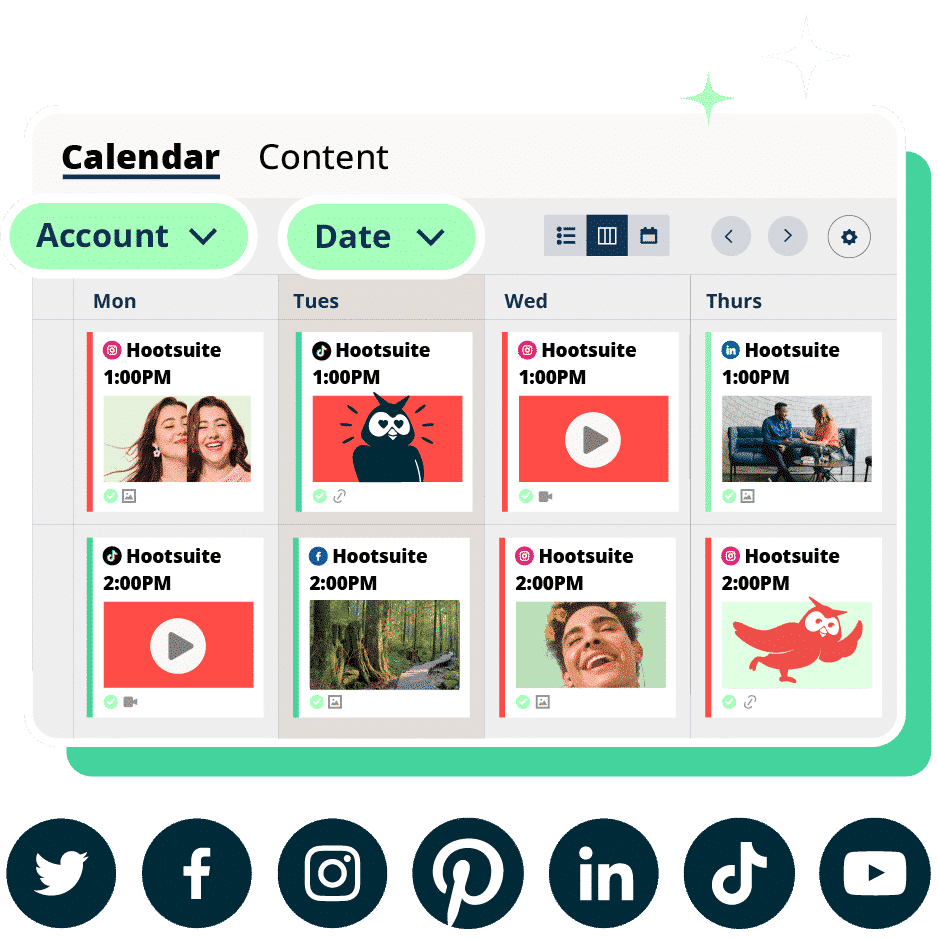
An effective social media strategy starts with clear goals and a deep understanding of your audience. From there, choose the platforms where they spend their time and create content that speaks to them.
Here’s a simple framework to get started:
- Set clear social media goals
- Identify your target audience
- Choose the right social media platforms
- Conduct a competitive analysis
1. Set clear social media goals
Without well-defined goals, measuring success and return on investment (ROI) is next to impossible.
Before you start posting up a storm, create a social media marketing goal that follows the SMART criteria (that means specific, measurable, attainable, relevant, and time-bound).
It’s important to avoid getting caught up in vanity metrics like the number of followers and likes — these stats may not reflect the true value of your performance. Instead, focus on meaningful metrics like engagement, click-through rates, and conversion rates.
Need some examples of SMART social media goals? We’ve got you.
2. Identify your target audience
Social listening tools can reveal a lot about the people interacting with your brand. By digging into your data, you can uncover key details like audience demographics, locations, and how people engage with your social media content.
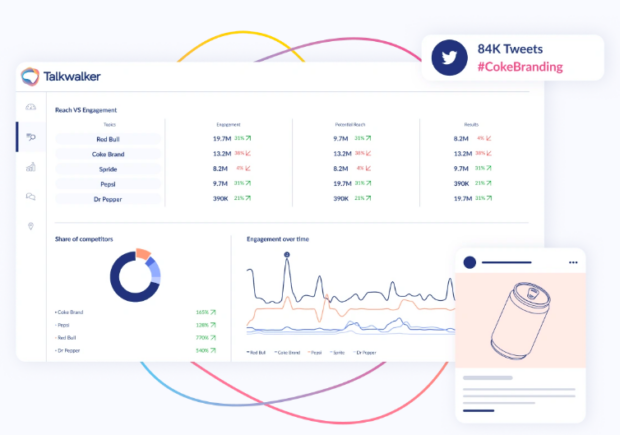
Talkwalker’s social data library includes more than 150 million sources and measures engagement volume, reach, sentiment, and more. With more than 50 advanced filters, you can segment your social data and understand the full impact of your online conversations.
The real value comes from what you do with those insights. When you understand who your audience is and what they care about, you can fine-tune your strategy and create high-quality content that speaks directly to them.
Here’s a simple guide and template for creating audience/buyer personas.
3. Choose the right social media platforms
Not every social platform attracts the same audience or rewards the same type of content. The key is focusing on the channels where your target audience already spends their time.
Take Fenty Beauty, for example. Beauty fans are everywhere on TikTok, and 79% of TikTok Shop sales in the U.S. come from health and beauty products. That makes TikTok a natural place for Rihanna’s cosmetics brand to show up.

Source: @fentybeauty
It’s also important to think about the kind of content your team can realistically create. If short-form video content doesn’t highlight your product well — or stretch your resources — it may make more sense to prioritize platforms like Pinterest or Instagram instead.
4. Conduct a competitive analysis
Smart brands keep an eye on their competitors’ social activity to see what’s working, what’s not, and where opportunities might exist.
Looking at their content, engagement, and campaigns can reveal useful insights you can apply to your own strategy. Want to dig deeper? Here’s a guide to running a competitive analysis on social media.
To build a strong social media presence, businesses need consistent habits that help them engage audiences, create valuable content, and refine their strategy.
Start with these social media best practices.
1. Practice social listening
Social listening is a great way to track discussions about your brand, products, and industry. Just set up a stream searching for your handle or a pertinent keyword. Monitor mentions — the good and the bad.

Source: Taco Bell
Social listening is like a superpower, one that helps you understand customer sentiments and respond effectively to feedback.
2. Collaborate with influencers
Social media has created its own ecosystem of creators with loyal, highly engaged audiences. Partnering with the right influencer can help your brand reach new communities and build trust faster than traditional advertising.
These partnerships can take many forms, from one-off sponsored posts to longer-term ambassador programs. Our influencer marketing guide is a great way to get up to speed.
And you don’t need a celebrity with millions of followers to see results. For example, Adobe partners with digital artists, from niche creators to well-known influencers, to show how people use its tools in real life.

Source: edgykatrina
3. Engage with the social community
Your feed isn’t the only place your brand can show up on social media. The comments section is where the real conversations happen.
When someone asks a question or leaves a comment, responding helps turn social media from a one-way broadcast into a genuine conversation.
Case in point: the example below from Beehiiv.

Source: Beehiiv
Great interactions can even become content themselves. Clever replies, helpful explanations, or humorous responses can be shared on your feed to highlight your brand personality.
4. Repost user-generated content
Coming up with fresh social content every day can feel like a lot. That’s where user-generated content (UGC) comes in.
Encourage customers to share photos or videos with a branded hashtag (think #myLevis). Not only does this keep your content calendar nice and full, but sharing user-generated content can act as social proof.
For example, White Fox reposts photos of customers wearing its clothing, keeping its feed full of authentic, community-driven content.

Source: White Fox
5. Experiment with targeted ads
Social media platforms offer powerful targeting tools, and you don’t need a massive budget to start using them.
You can boost an organic post that’s already performing well or run a dedicated ad campaign to reach new audiences. Most platforms let you target people based on factors like location, age, interests, and behavior, helping your content show up in the feeds that matter most.
Want to learn more? Here’s a no-nonsense guide to social ads.
6. Learn from your analytics
Use social media analytics to track how your posts and campaigns are performing. Looking at what works (and what doesn’t) helps your team spot patterns and make smarter decisions.
Over time, those insights help you refine your strategy, create stronger content, and keep your key metrics moving in the right direction.
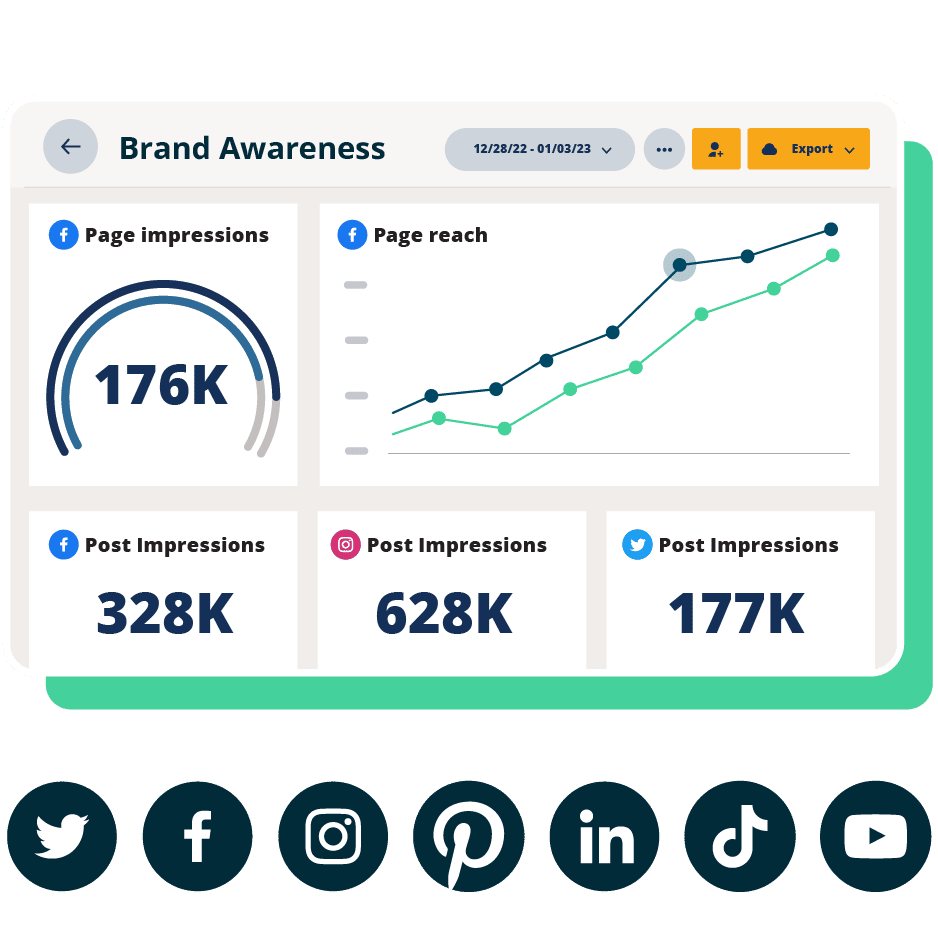
#1 Analytics Tool for Growth
Beautiful reports. Clear data. Actionable insights to help you grow faster.
7. Post with authenticity and personality
Authenticity and personality are two important ingredients for brands to stand out in crowded social feeds. Which makes sense: people come to social media for real stories, real voices, and real interactions.
Show some personality and be genuine in how you communicate. Transparency builds trust, and audiences are more likely to connect with brands that feel human.
For example, SiennaStudios gives followers a peek behind the scenes, sharing how its handcrafted art comes to life. It’s a simple way to turn the creative process into engaging content.

Source: SiennaStudios
8. Watch the trends and stay in the know
Social media moves fast. If you want to boost your reach, keep an eye on emerging trends and new formats.
Follow online tastemakers, browse the explore page, and stay active on the platforms you use. This helps you spot trends early and decide which ones make sense for your brand.
For example, Solidcore jumped on the “Beez in the Trap” trend with a video featuring three of its coaches.

Source: Solidcore
It’s also important to stay up to date on how platform algorithms evolve. The tactics that work today may not tomorrow, so keep an eye on updates and adjust your strategy as needed.
Explore more social media best practices here.
9. Engage with your followers
Engaging with followers is one way to transform social media from a marketing channel into a community.
Respond to comments, messages, and mentions when you can. Ask questions, start convos, and show your audience that someone is actually listening on the other side of the screen. This kind of interaction helps build trust and long-term loyalty.

Source: Chewy
Try to avoid posts that feel overly sales-focused. Instead, aim to connect. If you brighten someone’s day, teach them something useful, or give them a relatable moment, you’re far more likely to make a lasting impression and gain a new follower.
Here are 19 ideas for super engaging posts.
10. Be consistent
Social media audiences appreciate brands that show up regularly. Posting consistently keeps your business top of mind and helps build momentum over time.
Using a content calendar can make this easier by allowing your team to plan posts around campaigns, holidays, and seasonal events. In other words, no more scrambling for ideas at the last minute.
For example, in the month leading up to Easter, Crayola shared posts featuring products that would work well in Easter baskets, along with new seasonal color themes.

Source: @crayola
11. Hone your hashtag and social SEO strategies
Hashtags may not be the only discovery tool anymore, but they still help boost visibility and connect your content with the right communities.
For example, a bookstore might use #BookTok to reach TikTok’s massive reading community, while a business in Edmonton, Alberta might add #yeg so locals can easily find its posts. (Here’s our guide to using hashtags for every social network to help you get started.)
The Arizona Coyotes lean into this strategy by using the same #YotesForever hashtag their fanbase uses on X.

Source: @ArizonaCoyotes
But hashtags are only part of the story. Social platforms are becoming search engines, which means keywords matter too. Including clear, descriptive language in your captions helps algorithms understand and surface your content.
More on mastering the art of social SEO here.
12. Create content that people actually enjoy
You could flood your feed with dozens of forgettable posts every day. Or, you could focus on creating content that actually entertains, educates, or inspires your audience. We know which one people would rather see.
Think beyond simple product shots and look for creative ways to tell a story. For example, jewelry brand Freshly Unbothered turned its crystal bracelets into a playful “moods of the week” carousel, giving each piece its own cheeky personality.

Source: @freshlyunbothered
When your content is genuinely enjoyable, people are far more likely to engage, share it with friends, and keep coming back for more.
13. Run contests and giveaways
It’s no secret: people like free stuff.
Hosting a contest or giveaway is a simple way to boost engagement and attract new followers (we’ve got 12 inspiring examples right here). Ask participants to like, comment, share, or tag a friend to enter — actions that help expand your reach.
It’s a win-win: your existing audience gets a chance to score something fun, and your brand gains more visibility in the process.

Source: Owala
The right social media marketing tools can make life a whole lot easier for marketing teams. Here are four of our favorites for businesses.
(And if you’re ready to go deeper, we’ve got plenty more recommendations.)
1. Hootsuite
Hootsuite is an easy-to-use, comprehensive social media platform. It streamlines the entire social media process, including creating, scheduling, optimizing, and tracking social media posts.
With Hootsuite Composer, you can effortlessly plan and share content across various channels, including Instagram, X, LinkedIn, and YouTube. (For added convenience, Composer seamlessly integrates with useful tools like Canva and our in-house social AI tool, OwlyWriter.)
Using Hootsuite, you can easily repurpose your best-performing posts, identify and correct typos, upload branded graphics, and receive valuable recommendations for optimal hashtags and posting times.
Another super helpful feature for business is the Hootsuite Inbox. Inbox pulls all social media messages and interactions into one unified interface, regardless of platform.

Hootsuite Inbox simplifies conversations and customer service, enabling you to reply swiftly and trace a person’s interaction history with your brand, ensuring no customer is ever left hanging.
If you haven’t tried Hootsuite yet, we’ve got a free trial with your name on it.
2. Canva
If you’re flying solo or have a small social team without a graphic designer, Canva is the go-to platform for crafting original and branded graphics.
Canva provides an easy way to produce branded visuals for posts, ads, and more. Its library of templates and drag-and-drop design tools makes it simple to create polished graphics in minutes.
If you already have a Hootsuite account, you can easily connect it to Canva for direct access to upload and use your creative assets right in Composer.

3. Grammarly
Grammarly is an AI-powered writing assistant that checks text for grammar and spelling errors while also suggesting improvements for tone, clarity, and readability.
Recent updates also include AI-powered text generation and brainstorming features that can help teams draft social posts or refine messaging more quickly.
Even small typos can make posts look unprofessional or confuse your audience. Using a proofreading tool like Grammarly ensures your captions, replies, and campaign messaging are clear and error-free.

4. Google Analytics
Google Analytics helps you understand what happens after someone clicks from social media to your website. It tracks where your visitors come from, which pages they view, and what actions they take once they arrive.

This makes it easier to see how social media contributes to real business outcomes like sign-ups, purchases, or lead generation. You can also identify which platforms, posts, or campaigns are driving the most valuable traffic.
Here’s a breakdown of how to track social media in Google Analytics.
Frequently Asked Questions
How do businesses use social media to drive brand awareness and revenue?
Businesses use social media to build brand awareness and revenue by creating and sharing content that’s genuinely valuable, boosting audience engagement, and promoting products or services. Over time, this visibility helps build trust with potential customers, which can turn followers into new customers.
What social media platforms are best for business marketing?
The best social media platforms for business marketing depend on where your audience spends their time. Social media channels like Instagram, TikTok, LinkedIn, Facebook, Snapchat, and YouTube are some of the most popular options for reaching customers and growing or scaling a brand.
What is an effective social media strategy for businesses in 2026?
An effective social media strategy for businesses in 2026 focuses on consistent posting, useful content, and real engagement with your audience. Successful brands also experiment with formats like short-form video and pivot their content strategy based on performance data.
How do companies measure ROI from social media marketing?
Companies measure the return on investment (ROI) from their social media marketing efforts by tracking metrics such as engagement, website traffic, leads, click-through rate, conversion rate, and sales generated from social channels.
What are best practices for managing social media for a growing business?
Best practices for managing social media for a growing business include setting clear goals, creating a content calendar, and maintaining a consistent brand voice. Social media management tools like Hootsuite can also help teams schedule content, stay organized, and track performance as they grow.
Save time managing your social media presence with Hootsuite. Publish and schedule posts, find relevant conversions, engage your audience, measure results, and more — all from one easy-to-use dashboard. Try it free today.